


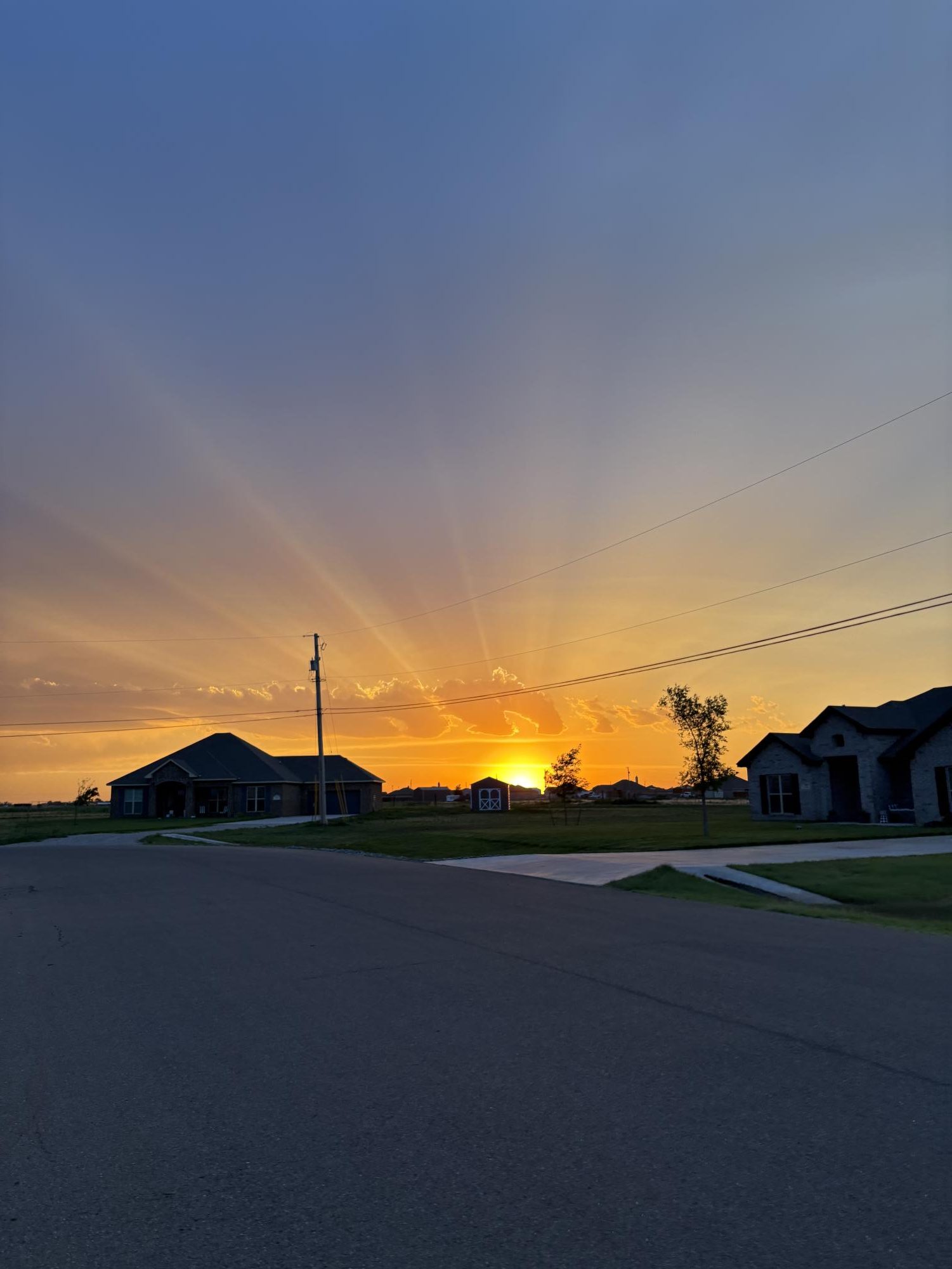
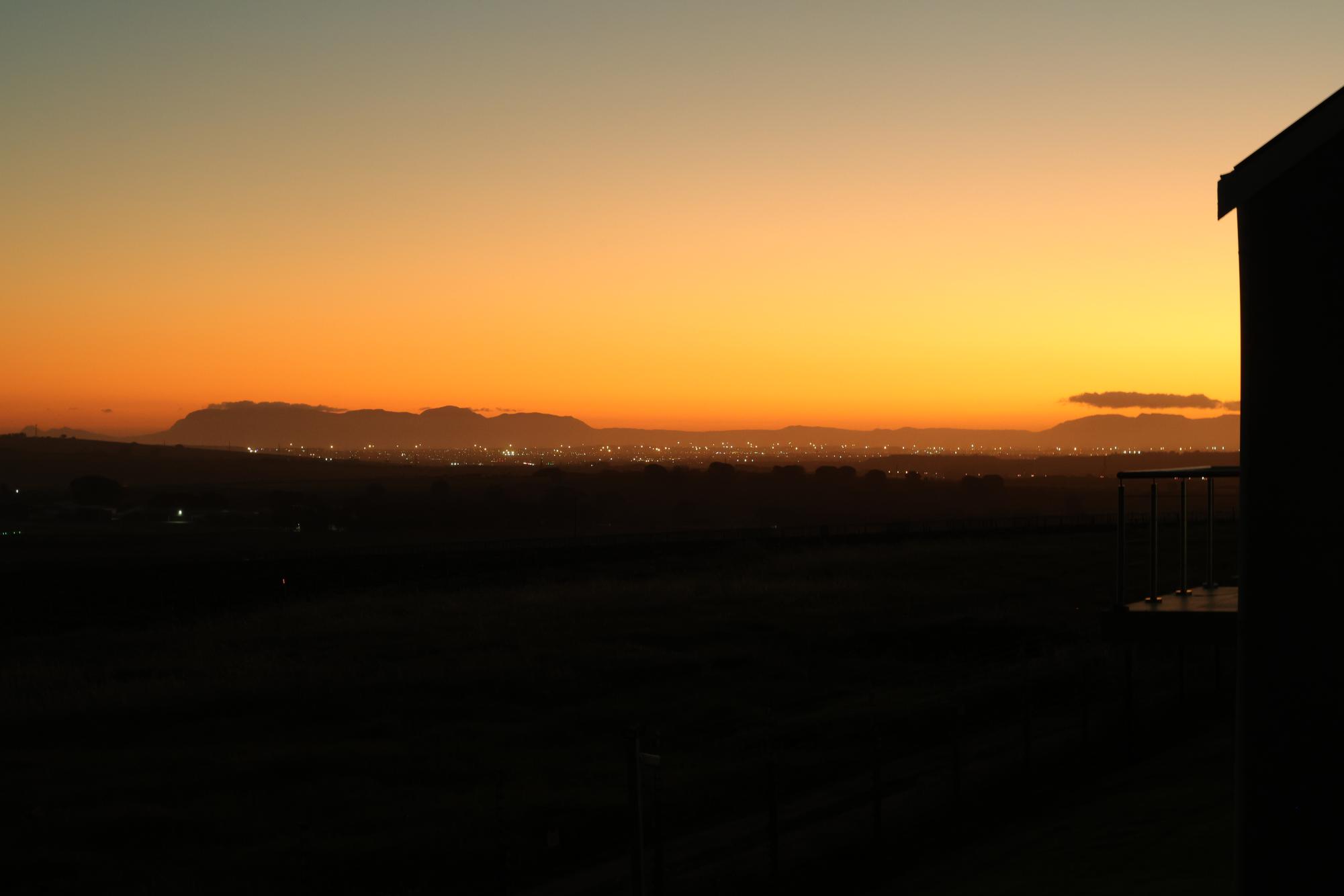
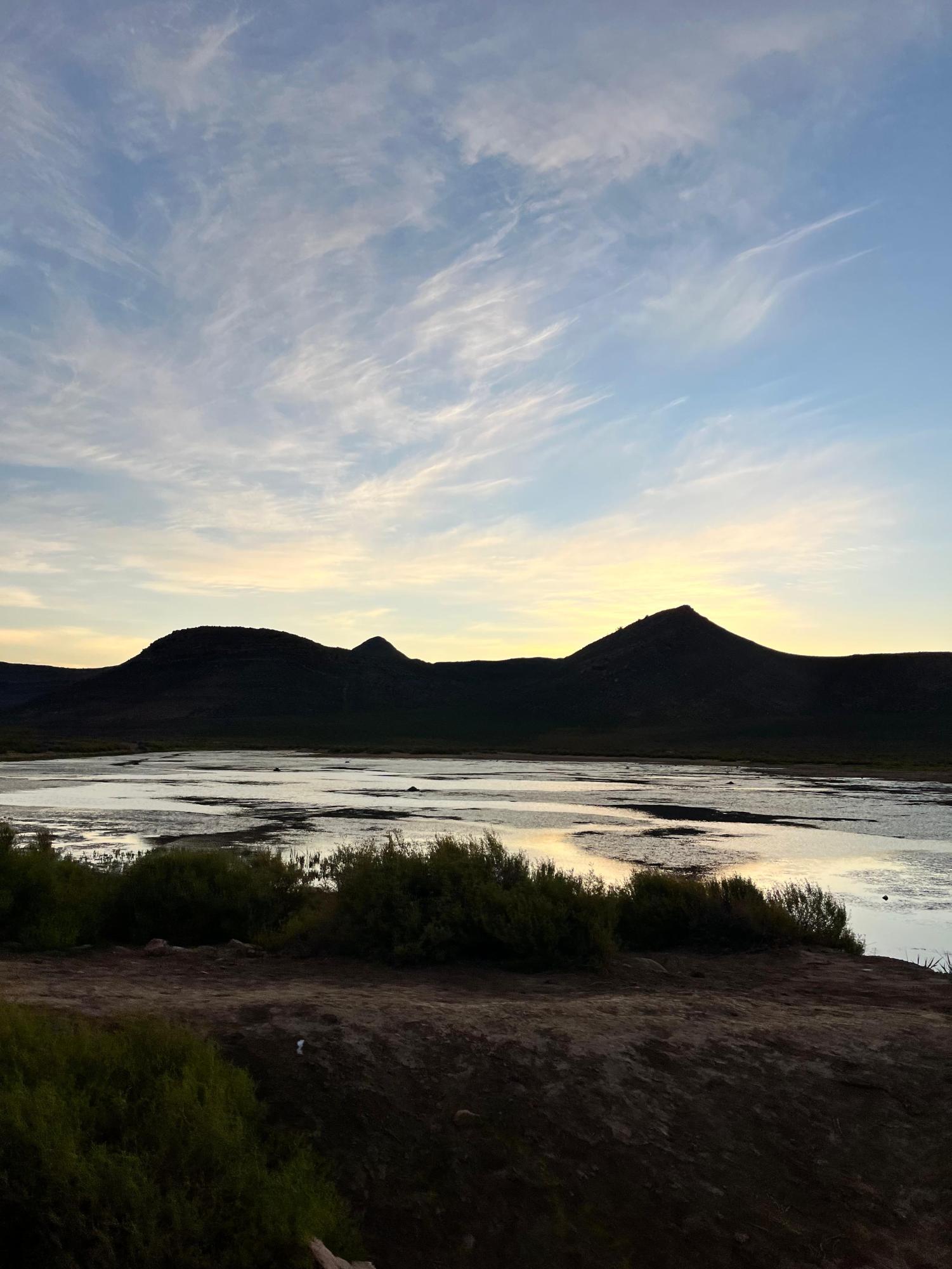
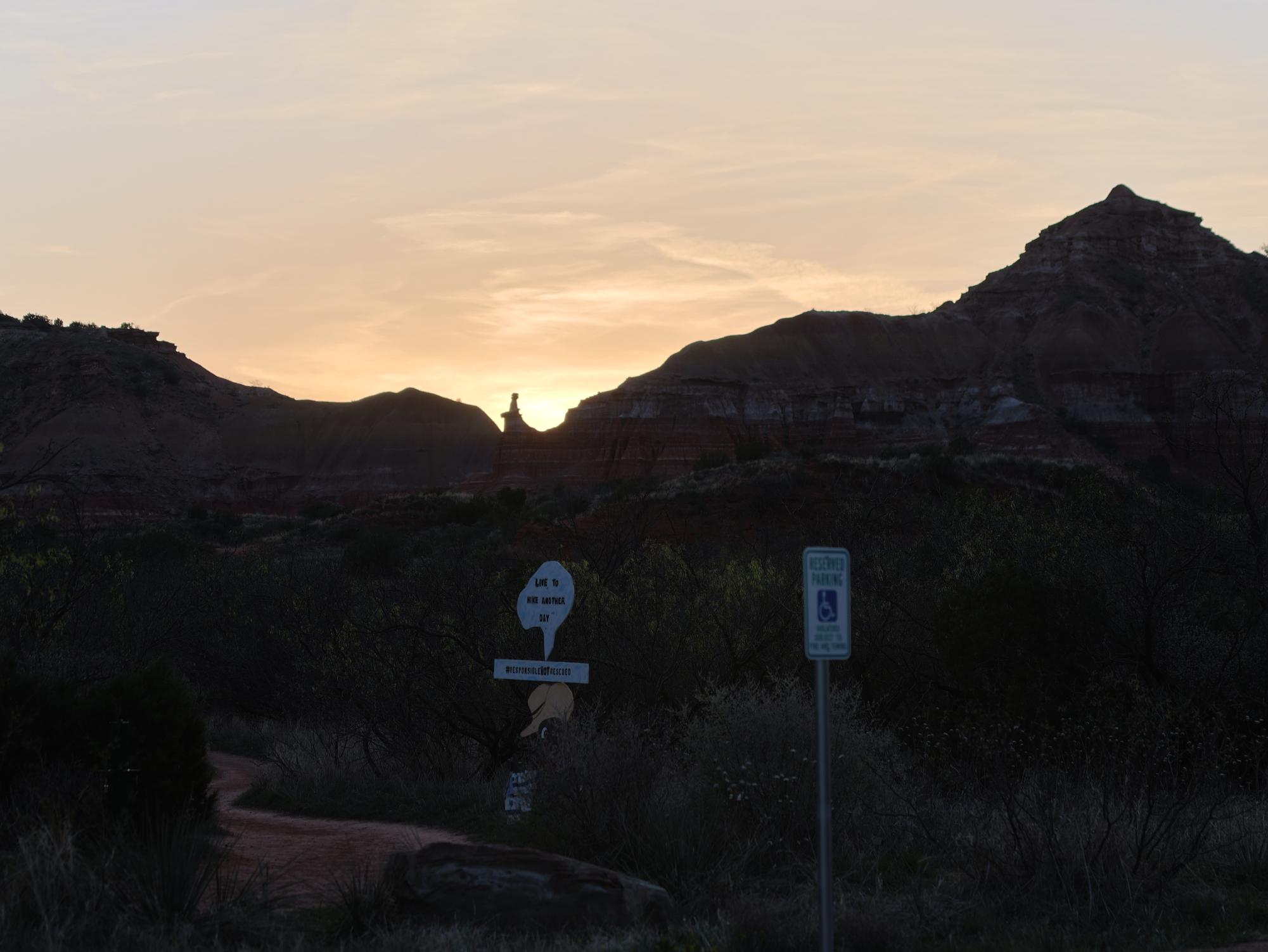
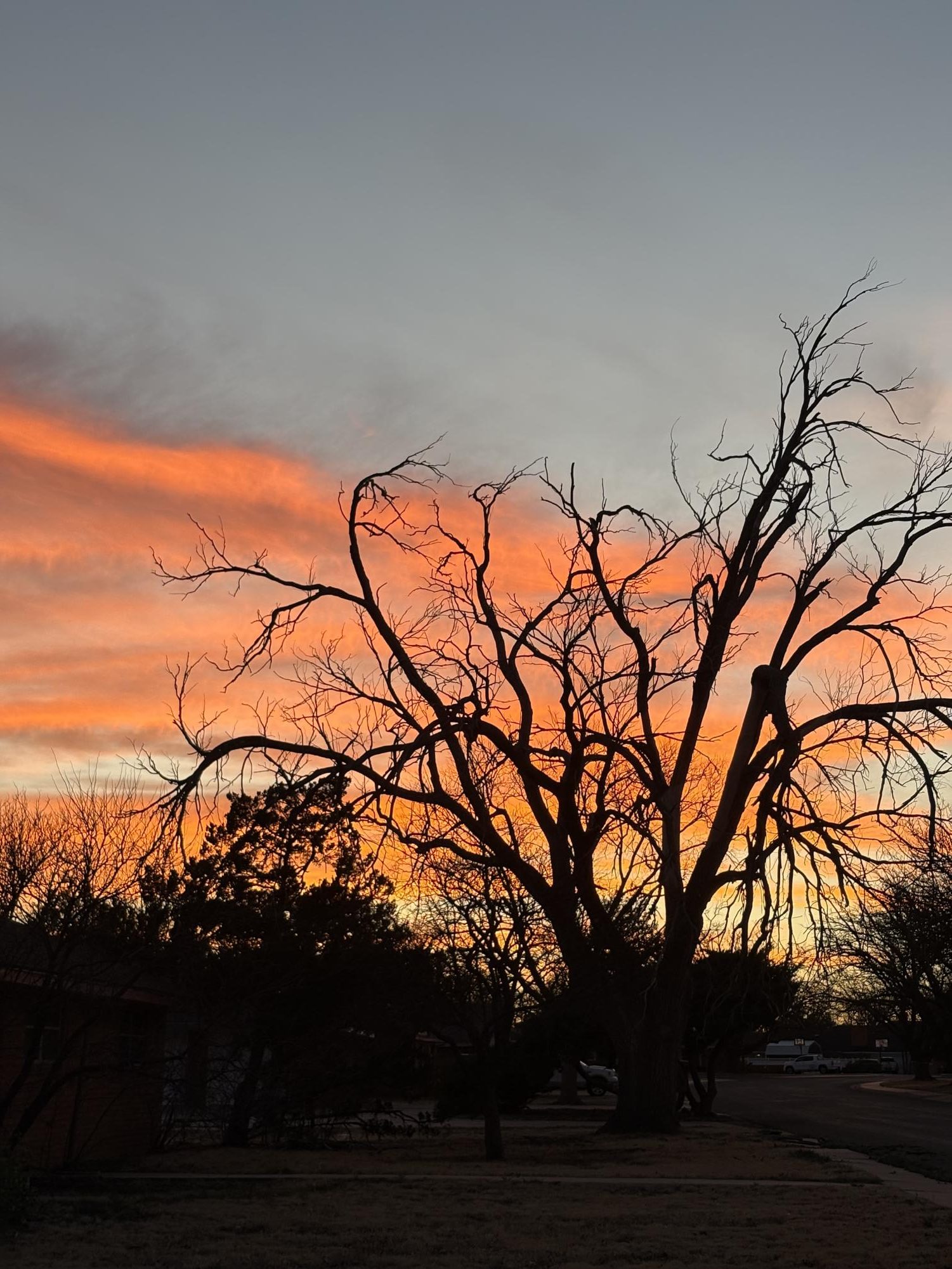
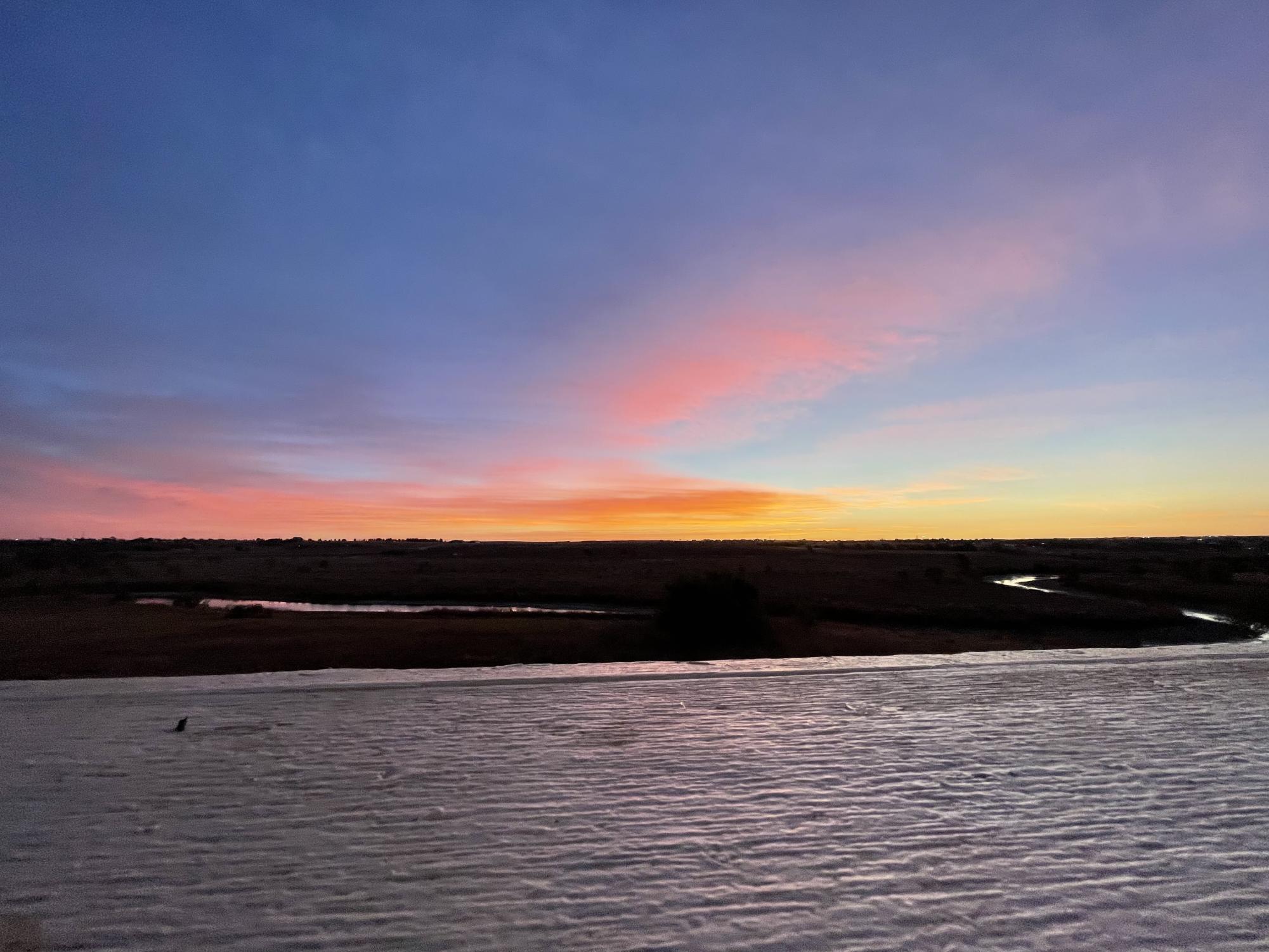
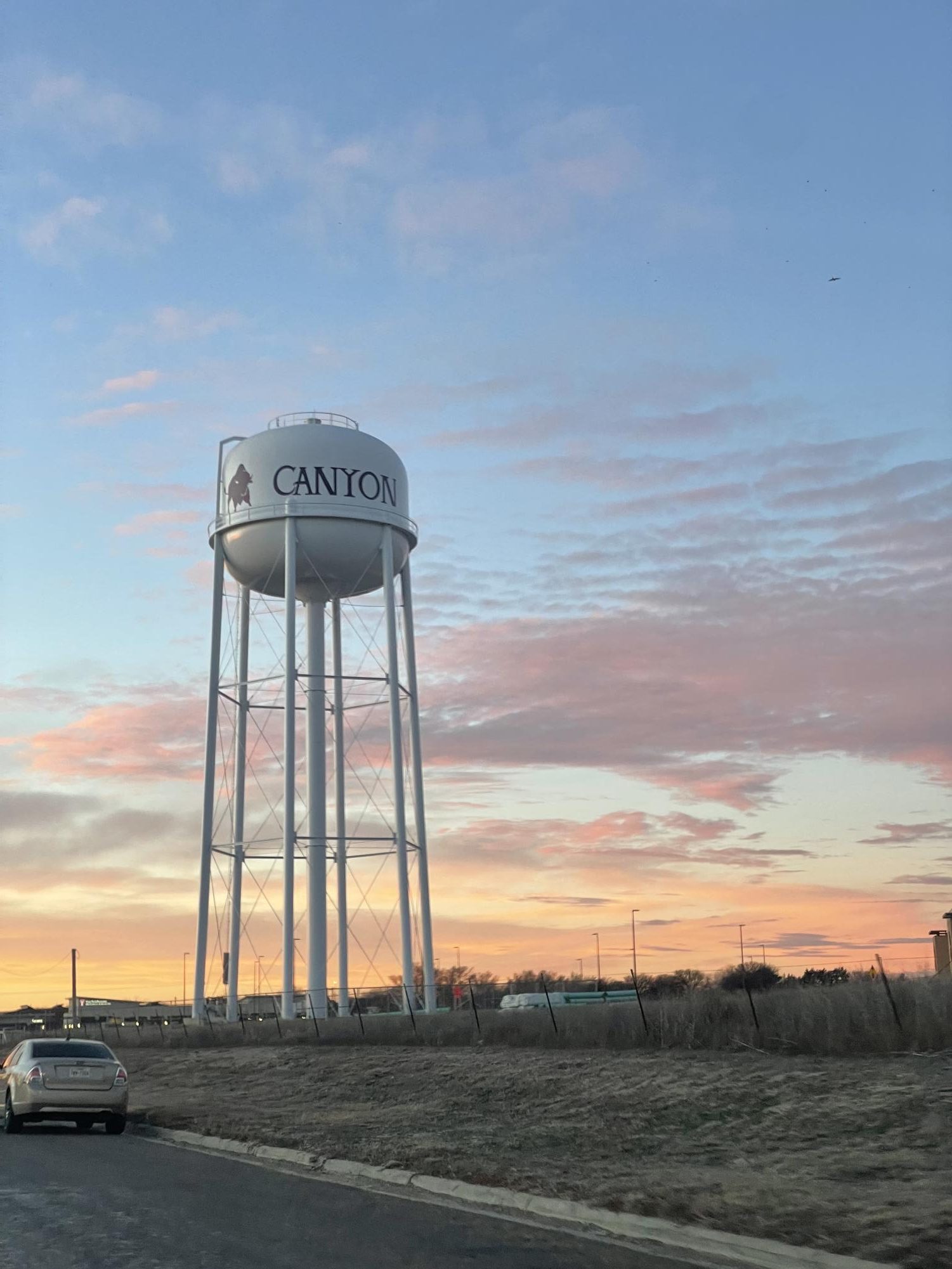
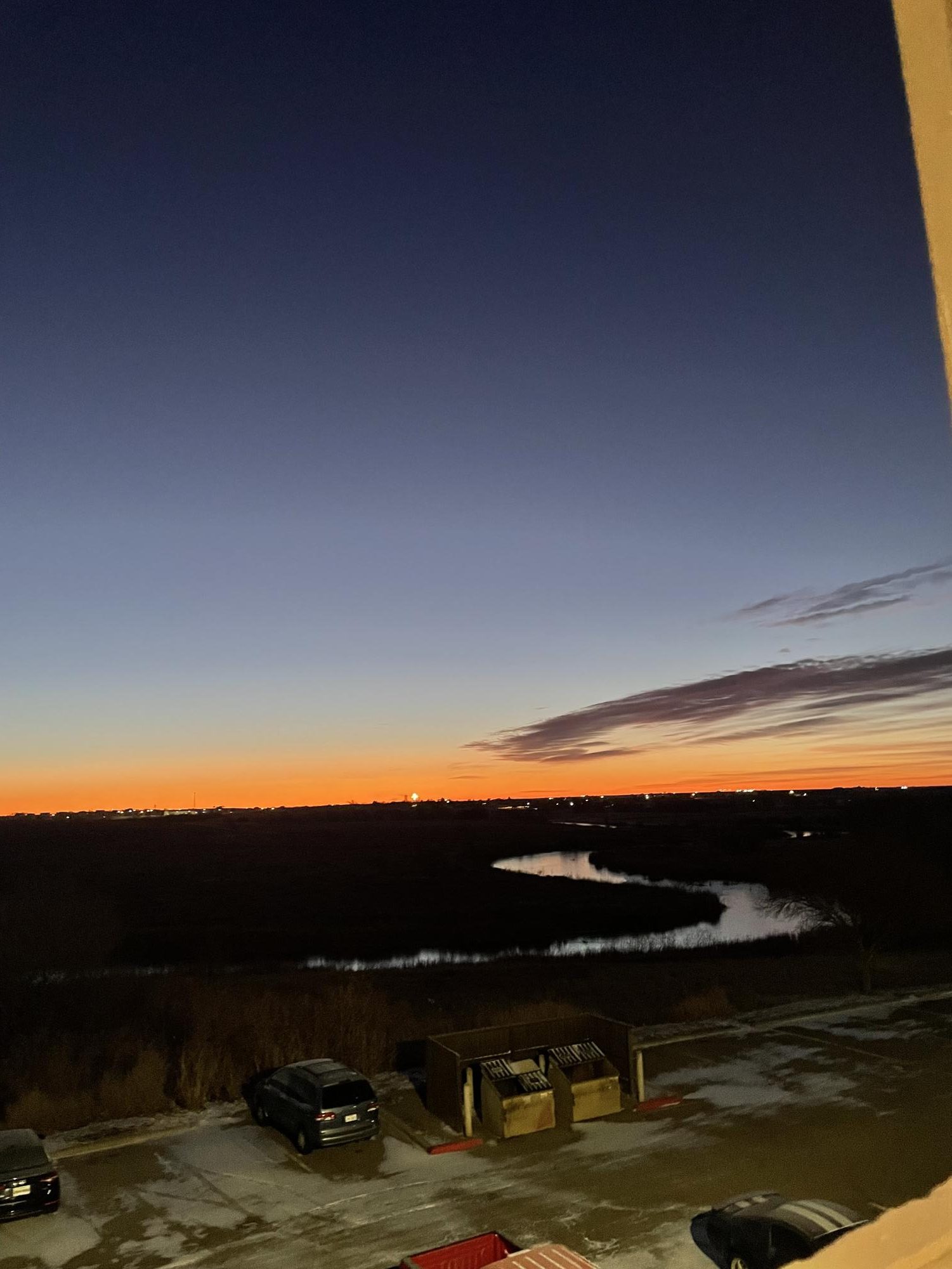
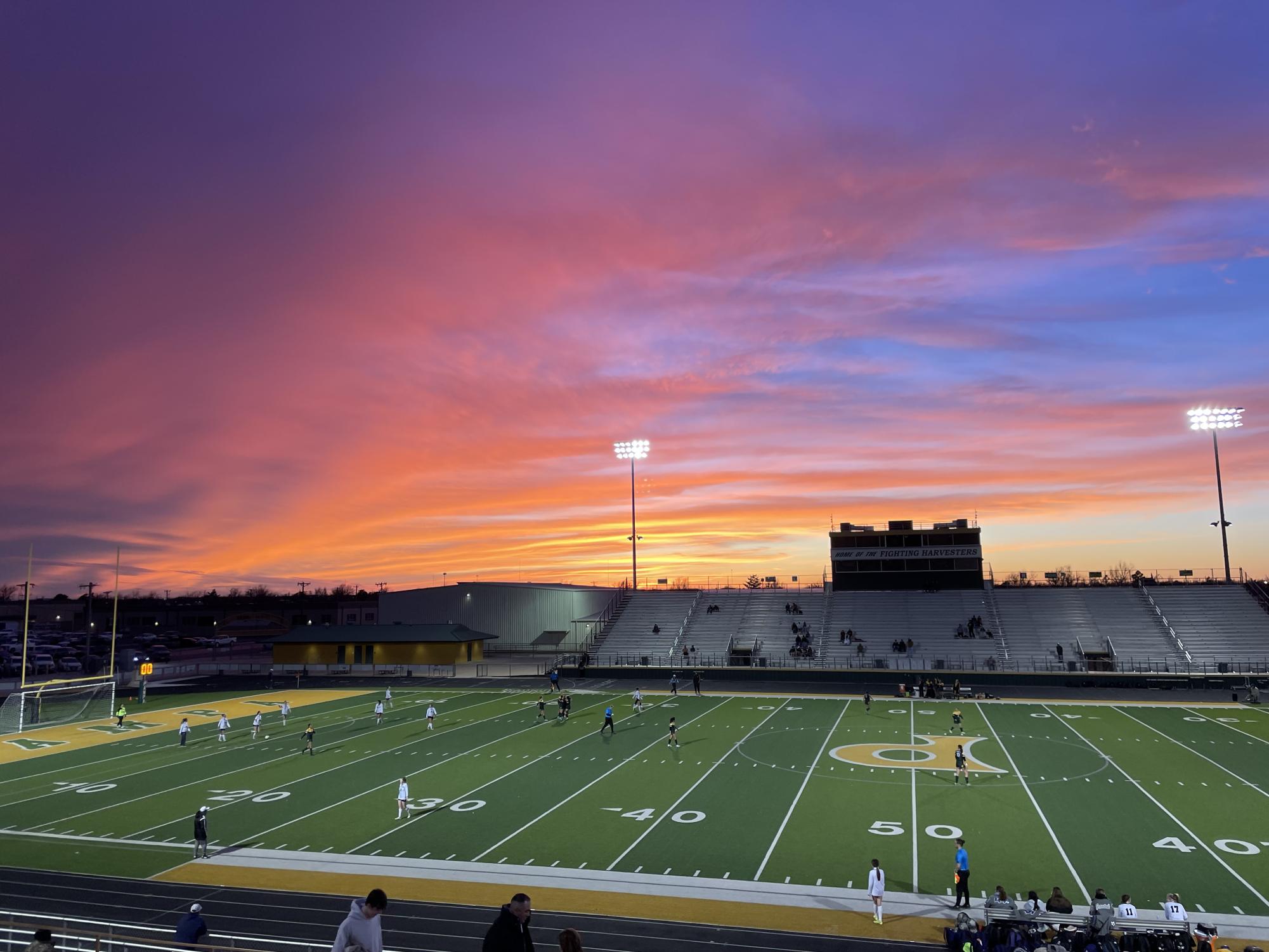
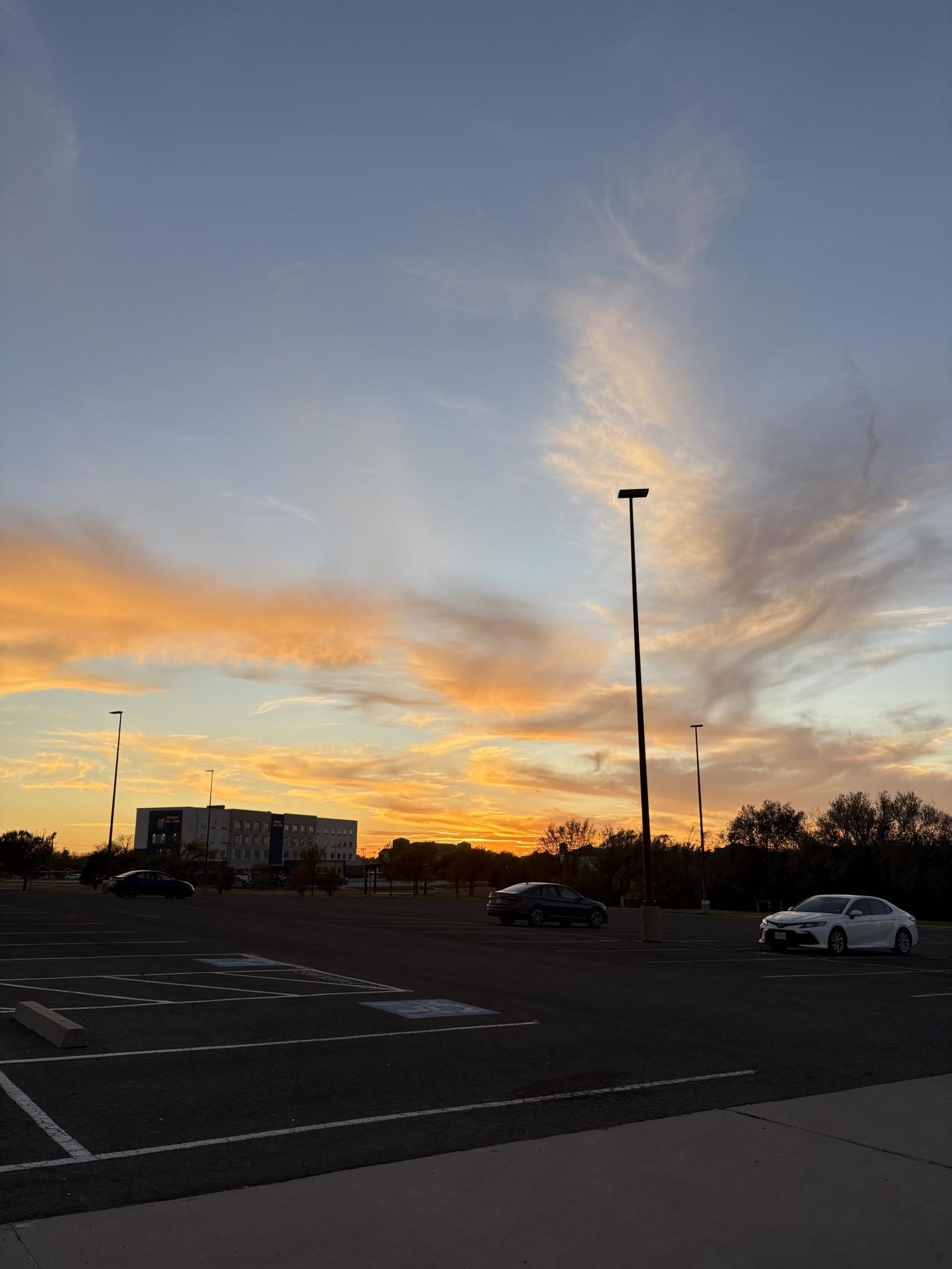
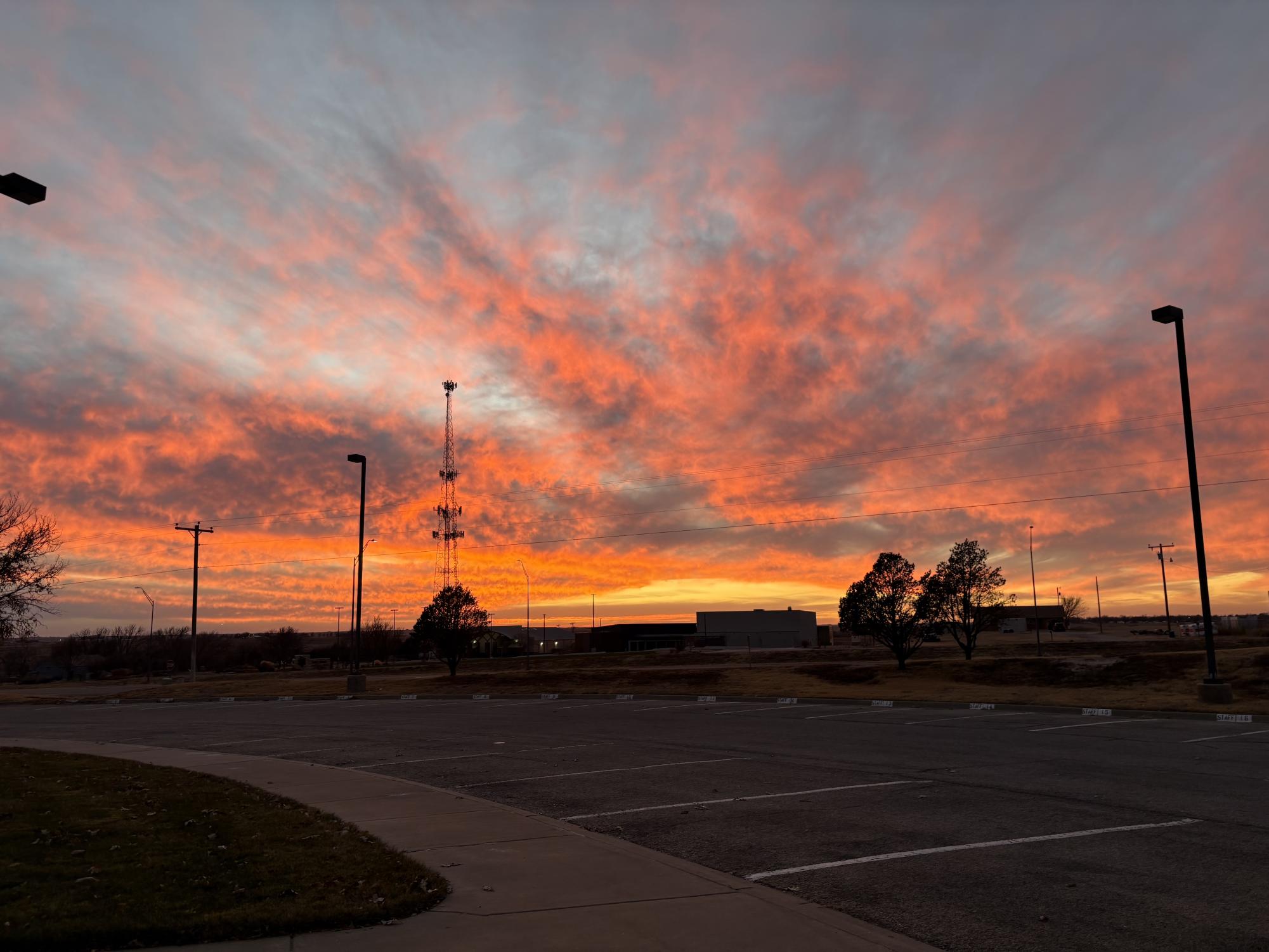
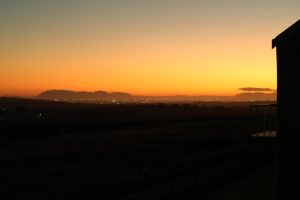
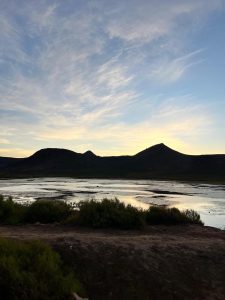
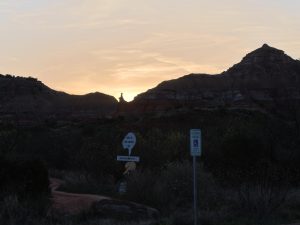
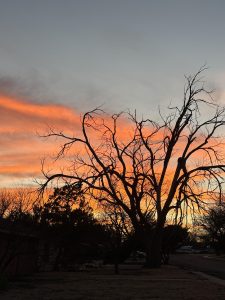
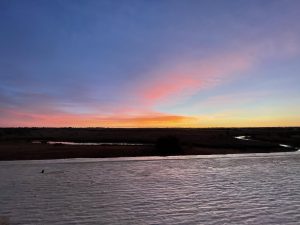

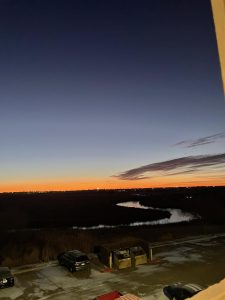
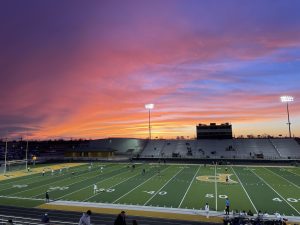
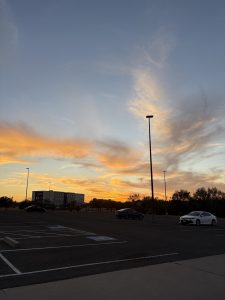
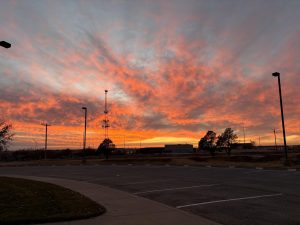
Here in the Texas Panhandle we get to experience a beautiful array of colors most every night and morning as we move around the sun. Orange, purple, pink, red, you name a color and we probably see it in the sky around here. Poems, movies, songs, painting, sunsets and sunrises have always seemed to captivate humans, but how do they happen?
First off, let’s start with why it’s normally blue. To do that, we have to know how we see light. Light comes in the form of an electromagnetic wave, different colors are formed when that light has lower or higher wavelengths. The shorter the wavelength, the higher the frequency, and the farther toward ultraviolet, aka blue, the light will appear. Vice Versa, the longer and lower frequency the wave, the more it will be towards the infrared side of the spectrum, making it appear more red. Everywhere in the middle, between a short and long wavelength, will appear to us as the other colors of the spectrum, or the rainbow.
Objects and elements appear as a certain color to us based on the wavelength of light they do, or do not, absorb. For example, we all learn about photosynthesis and how green plants have a pigment called chlorophyll. Chlorophyll typically absorbs colors like blue, purple, red, and orange, depending on the chlorophyll type, a or b. Because it cannot absorb green and yellow, it’s what we are able to see. The elements in the atmosphere work in a similar way.
The atmosphere is made up of many different elements, about 78% is nitrogen, around 21% is oxygen, and the rest is comprised of argon, carbon dioxide, neon, helium, methane, and ozone. Each of these unique elements has the ability to scatter light. A phenomenon called Rayleigh Scattering. When the sunlight reaches earth’s atmosphere, it arrives in a form of light that, to us, actually appears white. However, white light is actually the combination of all the light frequencies and we only see color from it when it is reflected, refracted, absorbed, or scattered. So, when it hits the particles in the atmosphere, because of the kind of elements that make up our world, the light waves that get scattered are typically short, making us see blue.
“Nitrogen molecules and oxygen molecules are incredibly tiny, about two thousand times smaller than the wavelength of visible light.” West Texas A&M University Associate Professor of Physics, Dr. Christopher Baird said. “They are so tiny that when light hits one of these air molecules, it’s not like when a ray of light hits a mirror at a certain location on the mirror and then reflects. Rather, the entire molecule is immersed all at once in the electric field of a single ray of light. As a result, the light bounces off the air molecule in a different way from what we are used to, through a process called Rayleigh scattering.”
The scattering itself though is actually quite complex. Light is a wave, made up of photons, similar to how an element is made up of atoms. When a photon reaches atoms in the the element, the electron is forced to oscillate because of the energy the photon brings to it, think of this like adding electricity to make a fan move.
“To keep it short, the end result is that the higher frequency colors of the rainbow spectrum, namely cyan, blue, and violet, are most strongly scattered away in all directions, whereas the red, orange, and yellow colors most strongly travel on through in the forward direction without scattering,” Baird said.
Next, the electron must do something with all the energy it has just received, so it starts moving up and down, think of a racquetball bouncing in a small space. Eventually the energy is released again as a singular photon, but this time in a completely unknown direction, like sporadically throwing said ball while spinning in a chair.
The phenomenon creates, as a whole, what appears to be waves like those that expand from a cannonball dive into water. That is actually because so many singular waves are being released in so many different directions, so fast it looks like a circle. Then if you start looking at that circle from all different angles, the polarization changes and it starts looking more like a rainbow donut.
When the sun is further away from us, i.e. when the sun is setting or rising, the particles of light the sun is emitting must travel farther distances and be scattered many times. This results in the different colors that we see in the sky. Red is the longest wavelength in the visible spectrum so that’s why we typically see the sun itself, and the light directly around it, as red. From there, the different colors depend on the angle of the sun, the particles light is passing through, and even down to the way your eye is formed.
“By the time the sunlight reaches you, all of the cyan, blue, and violet colors have already been scattered completely out of the sunlight, to other places on earth.” Baird said. “This means that the sunlight reaching you is no longer just white with a slight hint of orange and yellow, like during the day, but is completely bright red, orange, and yellow, becoming redder as the sun gets lower on the horizon. Therefore, around sunrise and sunset, your local patch of sky and surroundings—including the clouds, trees, hills, buildings, dust, and smoke—are illuminated with vivid red, orange, and yellow colors, as well as combinations of these colors, such as pink.”
Specifically here in the panhandle though, we are known for our beautiful skies, but why is it different here?
In the panhandle, thanks to the flat nature of the land, there’s less interference before the light reaches our eyes and thus the light travels further. The light traveling at low altitudes and for a longer distance, are the most vivid, when you combine the two, you get the array of colors we see so often.
“Simply put, without hills and giant trees getting in the way, the low-traveling rays of light, which around sunrise and sunset are the most colorful and vivid rays of light, can reach your local environment (thereby illuminating the local clouds and trees) more effectively when you are in the Texas panhandle,” Baird said.
Baird explained that the dust particles in the air and the low altitude clouds are the final step in reflecting the vivid light in our region.
“To be clear, the grains of sand in the air aren’t splitting the light into warmer colors going one direction and cooler colors going the other directions. The air molecules have already done that. And the grains of sand are too big, anyway, to do that. Rather, the grains of sand in the air reflect all of the final colors, red, orange, and yellow, into your eyes.”
Baird also expressed his thoughts when it came to the beauty in our skies.
“By education and training, I am both a physicist and an artist,” Baird said. “I therefore find the sky beautiful from an artistic perspective, as it looks like something a master painter would create. I also find the sky beautiful from a scientific perspective, because the process that gives rise to the colors of the sky is so interesting scientifically.”
.
Apart from appreciating the sky and how its colors are reflected, Baird elaborated about his thoughts when he sees them.
“Recently I have been driving my daughter to work several times a week early in the morning, early enough that we see the sunrise pretty much from beginning to end as we drive,” Baird said. “At those times, I also have the thought to try to not get too fixated on enjoying the sunrise that I am not paying attention to driving and crash. Also, sometimes when I am enjoying a sunrise or sunset, I think about how I would paint what I see, or how I would write a computer program that calculates the laws of physics to re-create what I see.”
Finally Baird shared some advice on viewing the colors at their best.
“A large plume of thick smoke from a fire can also reflect a lot of the rays of light with sunset or sunrise colors into your eyes, making for an unforgettable viewing experience,” Baird said” At the risk of me seeming morbid (because large plumes of smoke usually come from destructive wildfires and wide-spread residential fires), I’d encourage you, if you get lucky and there is a large plume of smoke in the sky at the time of sunset or sunrise, go outside and get a good look at it as it can be unforgettably beautiful.”